
Funded traineeships for young graduates at the EU Delegation to Egypt 2026
Funded traineeships for young graduates at the EU Delegation to Egypt 2026

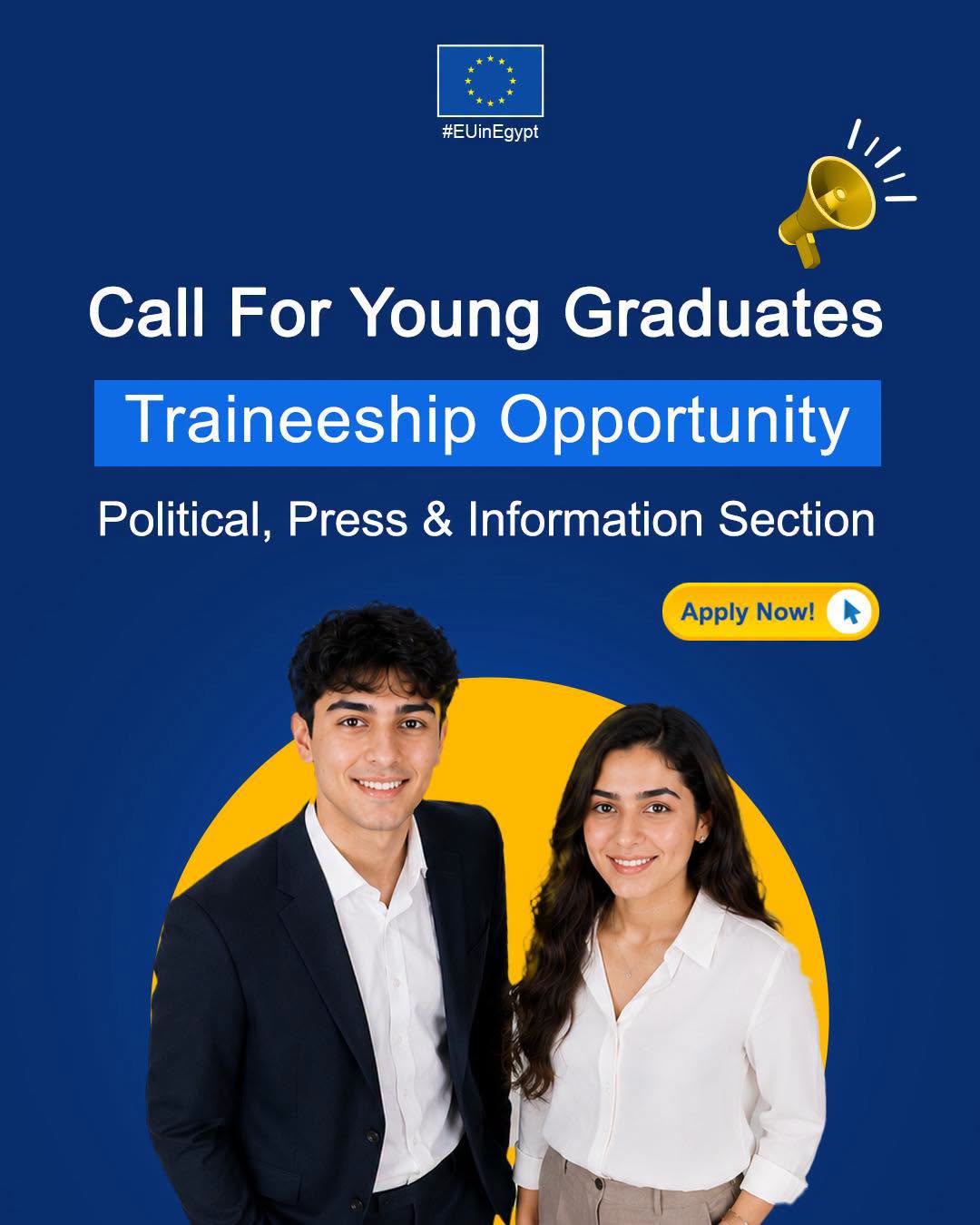
Funded traineeships for young graduates at the EU Delegation to Egypt 2026
The Funded Traineeships for Young Graduates at the EU Delegation to Egypt in 2026 offer a unique opportunity for recent graduates to gain invaluable experience in international relations and diplomacy. These traineeships are designed to provide young professionals with firsthand exposure to the workings of the European Union’s external action and its diplomatic missions. Participants will engage in a variety of tasks, including research, policy analysis, and administrative support, while working alongside experienced EU officials. This program not only enhances the professional skills of young graduates but also deepens their understanding of EU-Egypt relations and global affairs. With a focus on fostering future leaders, the traineeships are fully funded, ensuring that talented individuals from diverse backgrounds can participate and contribute to the EU’s mission in Egypt.
Application Process for Funded Traineeships at the EU Delegation to Egypt 2026
The application process for funded traineeships at the EU Delegation to Egypt in 2026 presents a unique opportunity for young graduates to gain invaluable experience in international relations and diplomacy. This initiative is designed to provide recent graduates with practical exposure to the workings of the European Union’s external actions, thereby enhancing their professional development and understanding of global affairs. As the EU continues to strengthen its ties with Egypt, these traineeships play a crucial role in fostering mutual understanding and cooperation between the two regions.
To begin with, the eligibility criteria for these traineeships are clearly defined to ensure that candidates possess the requisite academic background and skills. Applicants must have completed a university degree in a relevant field such as political science, international relations, law, or economics. Additionally, proficiency in English is mandatory, given that it is the primary working language at the delegation. Knowledge of Arabic or French is considered an asset, as it facilitates better communication and engagement with local stakeholders. Furthermore, candidates should demonstrate a keen interest in EU-Egypt relations and exhibit a strong commitment to the values and objectives of the European Union.
The application process itself is meticulously structured to identify the most suitable candidates. Prospective applicants are required to submit a comprehensive application package, which includes a detailed curriculum vitae, a motivation letter, and academic transcripts. The motivation letter is particularly significant, as it provides candidates with the opportunity to articulate their interest in the traineeship and highlight their relevant skills and experiences. It is imperative that applicants clearly demonstrate how their academic background and personal attributes align with the objectives of the EU Delegation to Egypt.
Once the application deadline has passed, a rigorous selection process ensues. This involves an initial screening of applications to shortlist candidates who meet the eligibility criteria and exhibit the potential to contribute meaningfully to the delegation’s work. Shortlisted candidates are then invited for an interview, which serves as a platform for further assessment of their suitability for the traineeship. During the interview, candidates are evaluated on their knowledge of EU policies, their understanding of the socio-political context of Egypt, and their ability to work effectively in a multicultural environment.
Successful candidates are offered a traineeship contract, which outlines the terms and conditions of their engagement with the EU Delegation to Egypt. The traineeship typically lasts for a period of six months, during which trainees are assigned to various departments within the delegation. This rotational approach ensures that trainees gain a holistic understanding of the delegation’s operations and are exposed to a wide range of activities, from policy analysis to public diplomacy initiatives.
In conclusion, the application process for funded traineeships at the EU Delegation to Egypt in 2026 is a comprehensive and competitive endeavor that seeks to attract talented young graduates with a passion for international affairs. By providing a structured framework for professional development, these traineeships not only enhance the career prospects of participants but also contribute to the strengthening of EU-Egypt relations. As such, they represent a significant investment in the future of both regions, fostering a new generation of leaders equipped to navigate the complexities of global diplomacy.
Benefits of Participating in the EU Delegation to Egypt Traineeship Program 2026
Participating in the EU Delegation to Egypt Traineeship Program 2026 offers a multitude of benefits for young graduates seeking to enhance their professional and personal development. This prestigious program provides a unique opportunity to gain firsthand experience in international relations and diplomacy, which is invaluable for those aspiring to build a career in these fields. By engaging with the EU Delegation, trainees are exposed to the inner workings of the European Union’s external actions and its strategic partnerships with Egypt, thereby gaining insights that are not readily available through traditional academic pathways.
One of the primary advantages of this traineeship is the comprehensive understanding it offers of the EU’s role in global governance. Trainees are immersed in the daily operations of the delegation, allowing them to observe and participate in the formulation and implementation of EU policies. This exposure is crucial for developing a nuanced appreciation of the complexities involved in international diplomacy and the multifaceted nature of EU-Egypt relations. Furthermore, the program emphasizes the importance of cultural diplomacy and soft power, equipping trainees with the skills necessary to navigate and influence cross-cultural interactions effectively.
In addition to the professional insights gained, the traineeship fosters the development of essential skills that are highly sought after in the global job market. Participants are encouraged to engage in critical thinking, problem-solving, and strategic analysis, all of which are integral to the decision-making processes within the delegation. Moreover, the program places a strong emphasis on communication skills, both written and verbal, as trainees are often required to draft reports, briefs, and other official documents. These competencies are not only applicable within the realm of international relations but are also transferable to a wide range of professional contexts.
The EU Delegation to Egypt Traineeship Program also offers significant networking opportunities. Trainees have the chance to interact with a diverse array of professionals, including diplomats, policy experts, and representatives from various international organizations. These interactions provide a platform for building professional relationships that can be instrumental in advancing one’s career. Additionally, the multicultural environment of the delegation encourages the exchange of ideas and perspectives, fostering a deeper understanding of global issues and promoting collaborative problem-solving.
Moreover, the program is designed to be financially accessible, as it is funded by the EU. This funding alleviates the financial burden that often accompanies unpaid internships, thereby enabling a broader range of candidates to participate. By removing financial barriers, the program ensures that talented individuals from diverse backgrounds have the opportunity to contribute to and benefit from this enriching experience.
In conclusion, the EU Delegation to Egypt Traineeship Program 2026 offers young graduates an unparalleled opportunity to develop professionally and personally. Through direct engagement with the EU’s diplomatic efforts, participants gain invaluable insights into international relations, acquire essential skills, and build a network of professional contacts. The program’s commitment to inclusivity and accessibility further enhances its appeal, making it an ideal stepping stone for those seeking to make a meaningful impact in the field of international diplomacy. As such, this traineeship represents a significant investment in the future of young professionals and the broader goals of fostering global cooperation and understanding.

Eligibility Criteria for Young Graduates Seeking Traineeships at the EU Delegation to Egypt 2026
The European Union (EU) has long been committed to fostering international cooperation and understanding, and one of the ways it achieves this is through offering funded traineeships to young graduates. The EU Delegation to Egypt, in particular, provides a unique opportunity for recent graduates to gain invaluable experience in international relations and diplomacy. As we look ahead to 2026, it is essential to understand the eligibility criteria for these coveted positions, which are designed to attract the most promising young talents from across the EU and beyond.
To begin with, applicants must hold citizenship from one of the EU member states or from a candidate country that has a pre-accession strategy with the EU. This requirement underscores the EU’s commitment to strengthening ties within its own borders and with those nations aspiring to join the union. Furthermore, candidates must have completed a university degree, typically at the master’s level, in a field relevant to the work of the EU Delegation. This often includes disciplines such as international relations, political science, law, economics, or other related fields. The emphasis on higher education ensures that trainees possess a solid academic foundation upon which they can build practical skills during their tenure.
In addition to educational qualifications, language proficiency is a critical component of the eligibility criteria. Given the multilingual nature of the EU, candidates are expected to demonstrate proficiency in at least two EU languages. English and French are often preferred, as they are the primary working languages of the EU institutions. However, knowledge of Arabic, the official language of Egypt, is highly advantageous and can set candidates apart in the selection process. This linguistic requirement not only facilitates effective communication within the delegation but also enhances the trainee’s ability to engage with local stakeholders and understand the cultural context of their work.
Moreover, the EU Delegation to Egypt seeks candidates who exhibit a strong commitment to the values and objectives of the European Union. This includes a demonstrated interest in international cooperation, human rights, democracy, and sustainable development. Such commitment is often evidenced through previous volunteer work, internships, or professional experiences that align with the EU’s mission. By selecting individuals who are already aligned with its core values, the EU ensures that its trainees are not only skilled but also motivated to contribute positively to its diplomatic efforts.
Furthermore, the selection process places a significant emphasis on personal attributes such as adaptability, resilience, and the ability to work collaboratively in a multicultural environment. These qualities are essential for navigating the complexities of international diplomacy and for thriving in the dynamic setting of the EU Delegation. Candidates are often assessed through interviews and situational judgment tests that evaluate their problem-solving abilities and interpersonal skills.
In conclusion, the eligibility criteria for funded traineeships at the EU Delegation to Egypt in 2026 are designed to identify young graduates who possess the academic qualifications, language skills, and personal attributes necessary to succeed in a challenging and rewarding environment. By setting these standards, the EU not only ensures the effectiveness of its delegation but also invests in the development of future leaders who will continue to advance its mission of fostering peace, stability, and prosperity on a global scale.
Career Opportunities Post-Traineeship at the EU Delegation to Egypt 2026
The completion of a funded traineeship at the EU Delegation to Egypt in 2026 presents young graduates with a unique platform to launch their careers in international relations and diplomacy. This opportunity not only provides invaluable practical experience but also opens doors to a myriad of career paths within the European Union and beyond. As the traineeship concludes, graduates find themselves equipped with a comprehensive understanding of EU policies, diplomatic protocols, and the intricacies of international cooperation, all of which are highly sought after in the global job market.
One of the most direct career trajectories post-traineeship is securing a permanent position within the European Union institutions. The experience gained at the EU Delegation to Egypt serves as a significant advantage for graduates aiming to pass the rigorous selection processes of the European Personnel Selection Office (EPSO). The practical skills and knowledge acquired during the traineeship, such as policy analysis, report writing, and stakeholder engagement, are directly applicable to roles within the European Commission, the European External Action Service, and other EU bodies. Moreover, the professional network developed during the traineeship can provide crucial support and guidance during the application process.
In addition to opportunities within the EU, graduates may also pursue careers in international organizations such as the United Nations, the World Bank, or the International Monetary Fund. The experience of working in a multicultural and multilingual environment at the EU Delegation to Egypt is particularly beneficial for roles in these organizations, where similar skills are required. Furthermore, the traineeship’s focus on EU-Egypt relations provides graduates with a nuanced understanding of Middle Eastern geopolitics, which is an asset for positions that require expertise in this region.
Alternatively, some graduates may choose to leverage their experience to enter the private sector, particularly in industries that require expertise in international trade, development, or regulatory affairs. Multinational corporations, consultancy firms, and non-governmental organizations often seek individuals who possess a deep understanding of EU regulations and international diplomacy. The ability to navigate complex political landscapes and engage with diverse stakeholders is a skill set that is highly valued in these sectors.
Moreover, the traineeship experience can also serve as a stepping stone for those interested in pursuing further academic qualifications. Graduates may opt to enroll in advanced degree programs in international relations, European studies, or public policy. The practical insights gained during the traineeship can enrich their academic pursuits, providing a real-world context to theoretical frameworks. Additionally, the professional connections made during the traineeship can facilitate research collaborations and academic exchanges.
In conclusion, a funded traineeship at the EU Delegation to Egypt in 2026 offers young graduates a wealth of career opportunities. Whether they choose to continue within the EU framework, join international organizations, enter the private sector, or pursue further academic endeavors, the skills and experiences gained during the traineeship are invaluable. The program not only enhances their professional competencies but also broadens their perspectives, preparing them to contribute effectively to the global community. As such, the traineeship serves as a pivotal foundation for a successful and impactful career in international affairs.
e offer:
Traineeships of up to 6 months within the following section of the EU Delegation to Egypt, starting in October 2026.
Traineeship in the Political, Press and Information Section (PPI):
The Political, Press and Information Section monitors and analyses political developments, manages relations with government and civil society and promotes EU values and policies. It also handles media relations, public diplomacy and strategic communication to enhance the EU’s visibility in Egypt.
Main tasks:
- Research on issues regarding PPI job;
- Support PPI on day to day work (preparation and attendance to meeting organizational and logistic tasks);
- Assist in preparation of press and information and public diplomacy activities;
- Update the Delegation’s website and social media platforms;
- Assist in writing press statements, in addition to press reports on specific issues related to how the EU and the activities of its Delegation are portrayed in the media;
- Assist in meetings and drafting minutes.
- We look for:
- Qualifications or special requirements:
- Taking into account the local health and security conditions, applicants currently residing in the Arab Republic of Egypt will only be considered.
- Interest in – and preferably knowledge of – Egyptian politics;
- Ability to handle sensitive issues in a responsible manner;
- Excellent analytical and drafting skills;
- Excellent English and Egyptian languages skills.
- How to apply?
- Candidates must apply to the e-mail address DELEGATION-EGYPT-HR@EEAS.EUROPA.EU and send the following documents:
- A detailed standard Europass curriculum vitae (CV) https://europa.eu/europass/en (CVs in other format will not be considered)
- a cover letter describing why you want to participate in a EU traineeship
- and an application form
- Please mention in the subject of your e-mail: Funded Traineeship Egypt
-
Important information to read before applying
- Before applying you are requested to examine the dedicated website as well as the general eligibility criteria for a paid traineeship (Article 8 of the Decision ADMIN(2017)28 – Paid traineeship).
- The selected trainee will receive a monthly grant to cover living expenses. All costs related to travels, visa, insurance, accommodation must be borne by the trainee.
- Applications from non-eligible candidates will not be considered. After the evaluation of all applications, shortlisted candidates will be contacted and invited for an interview. Unsuccessful candidates will be notified by email. In case the selected candidates are not able to present the required documents, their application will be rejected.
- The traineeships can only be offered in compliance with the local legislation as well as the legislation of the country of origin.
- Citizens from EU Member states:
- must provide proof that they will be covered against the risk of a pandemic and the costs of repatriation;
- must hold a relevant entrance visa and / or temporary residence permit where applicable, based on the traineeship agreement, the duration of the traineeship, and in compliance with the local legislation.
Funded traineeships for young graduates at the EU Delegation to Egypt 2026